
I am told that there is a waterfall at the end of this trail in Vescagne. Although I am slowly picking my way through overgrowth and wiping spider webs from my sweaty face, I am determined to discover it.
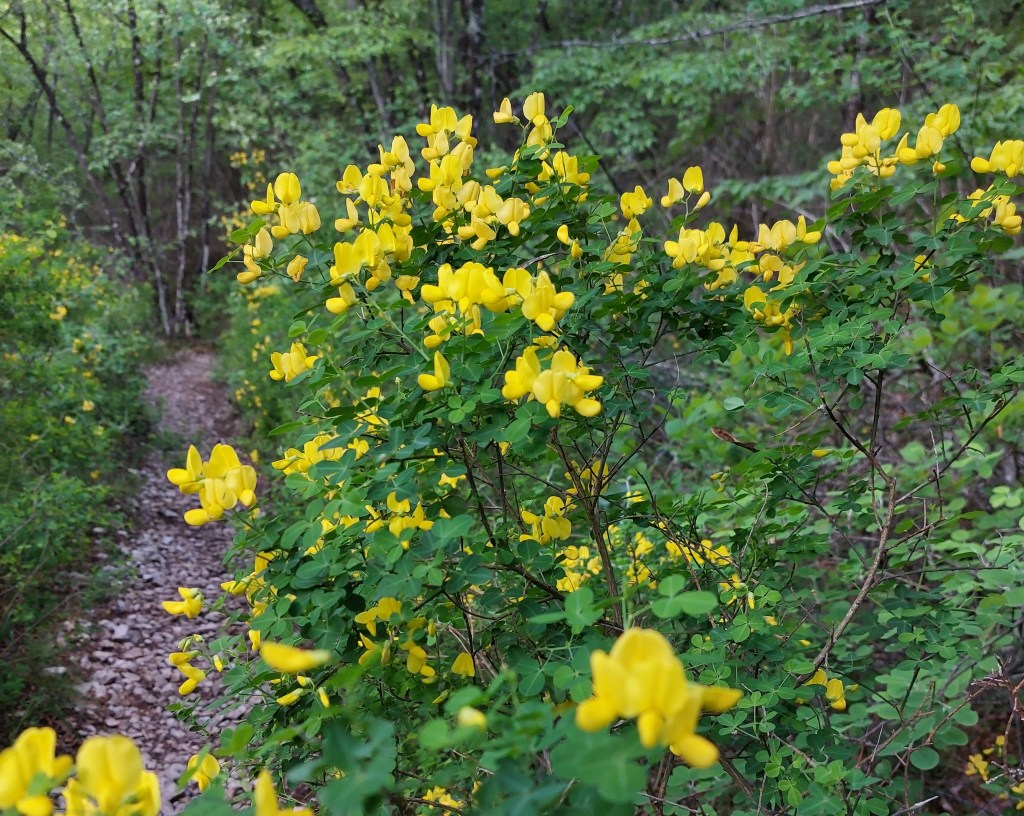
Faint murmurs of the waterfall appear and disappear as we twist along this riverside trail. Its echoes drift just out of reach, a haunted whisper disappearing into the hills above.
The Cagne river, which in truth is a small stream of mountain snow melt, is slow-moving and shallow today. With the summer heat and dryness, I wonder if perhaps the waterfall won’t be much to see.
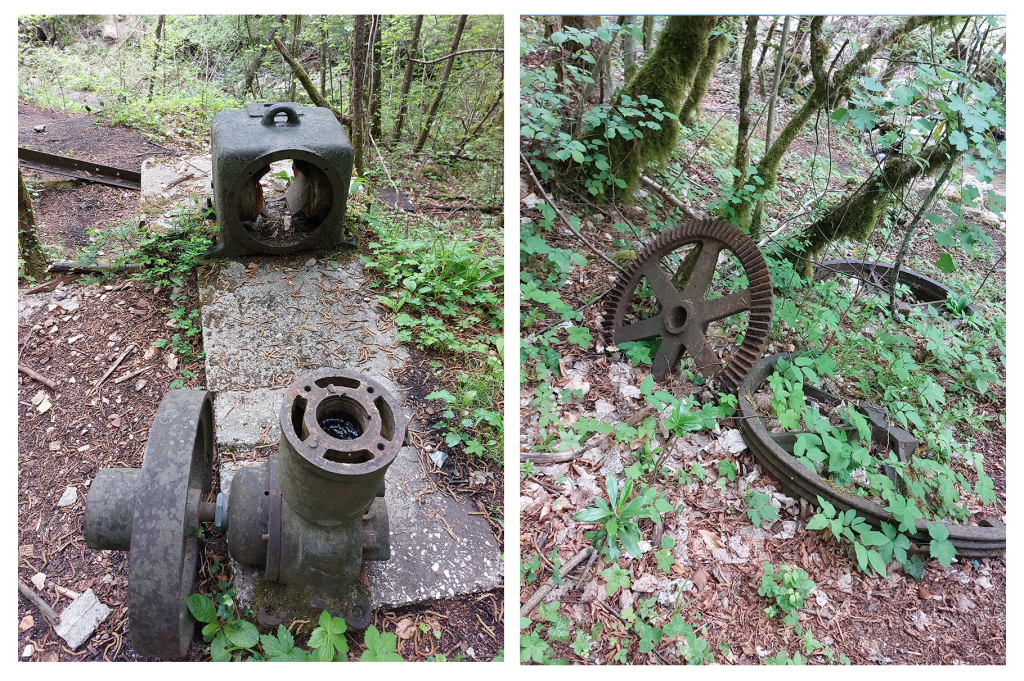
We edge nearer to the stream and stumble on the decaying remains of an abandoned lignite mine. I have read that lignite coal was extracted in this region in the 19th and 20th centuries – before people fully comprehended its toxicity – but I am still surprised to come upon the debris lying half-hidden among the vegetation.
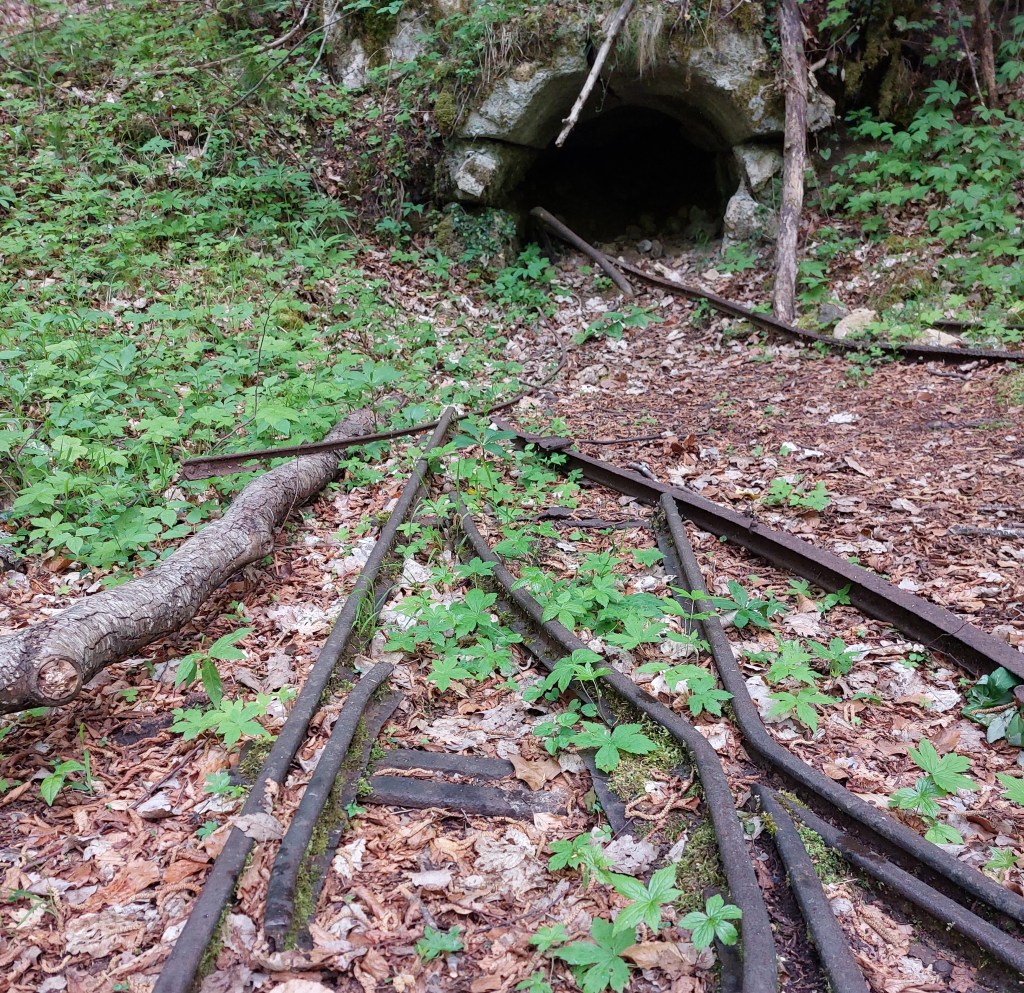
Lignite is nasty stuff.
The result of millions of years of compressed decaying peat and plant matter, lignite is the lowest-grade of dirty-burning coal. Beyond the toxins discharged into the air and water supply during mining, the burning of lignite in power plants releases the highest levels of particulates, greenhouses gases, and heavy metals per megawatt hour[1] of energy created. Considering that coal-fired plants account for 40% of greenhouse gases, lignite’s impact on global warming is significant[2].
And the direct impact on human health is also massive. Lignite and other coal pollutants attack our neurological, cardiovascular, and pulmonary systems, and are core contributors to a multitude of cancers throughout the body.
In Europe alone, coal-fired plants were responsible for an estimated 22,900 premature deaths in 2013[3].
Unfortunately, despite the well-understood destruction caused by lignite and other coal, there is still a dog fight to eliminate coal as an energy source in the US.
Among European countries committed to the Paris Climate Agreement, lignite mining and lignite-fueled power plants are top targets for closure. Here in France, lignite mines and plants formerly dotted much of southeastern and northern France. These days, as part of the national phase-out of coal by the French government, all mines have been shuttered and only one coal power plant remains[4] (one other coal plant restarted this last winter to cope with the energy crisis brought on by the Ukrainian war[5]).
Back at our creek-side mine, it is unclear what drove its abandonment. It appears to have stopped operations at least a half-century ago. And the end seems rather abrupt – almost as if the people pushing the carts and hoisting the coal into the large rectangular bins simply evaporated, leaving everything right where it stood.
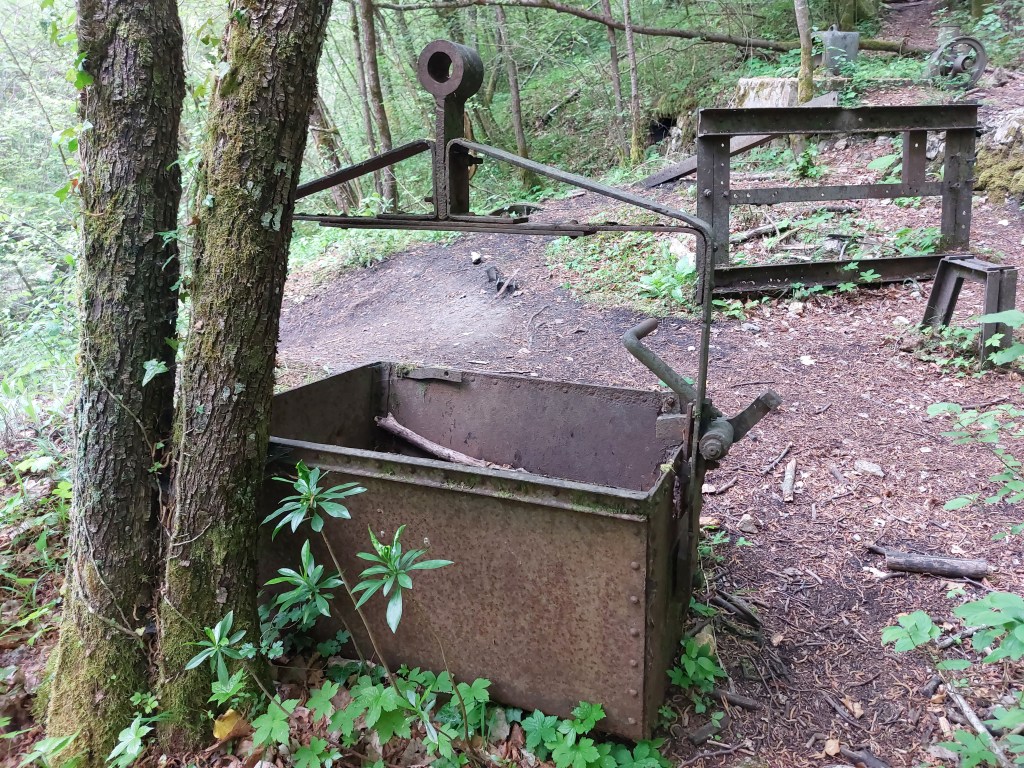
I am my father’s daughter, so like him I feel pulled to explore and consider each implement, each pulley system, each twisted piece of iron, each rust-bottom bucket. I search the pieces to understand how everything fit together – and try to imagine the reverberations and sounds of this mine while it was running.
It must have been quite a sight.
I imagine the young men and boys stooping low to enter the mine at its mouth. How the mules must have trudged back and forth with carts full of coal, sweat caking their coats during the humid summer months.
How a bell might have rung to announce the lunch break and what the workers might have talked about as they emerged, stretched their backs, and found a tree to sit under to rest with a piece of bread. And I wonder if everyone survived this mine or if some had to be carried out after a collapse or if toxic fumes became too much.
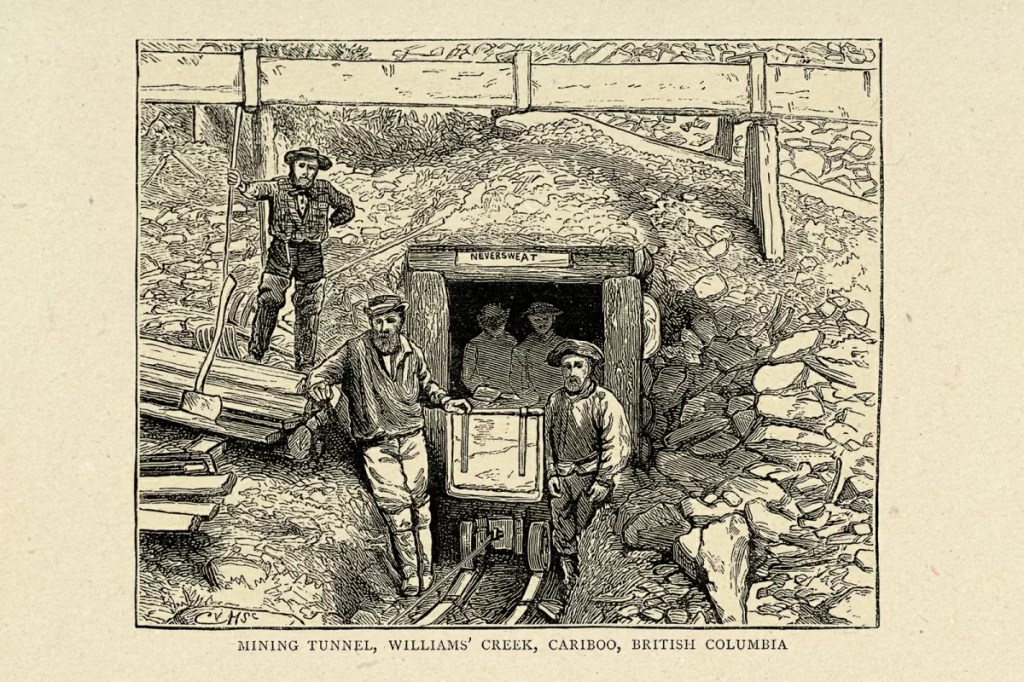
These days, nature has started its own reclamation process. Brave mosses and weeds now wrap their tender tendrils around the iron as if to coax it back to its rawest form. Rainwater and rust have begun to erase the structures bit by bit. Animals have made their homes within the cavernous opening, finding a safe hiding places for their nests.
Nature moves on. And so must we.
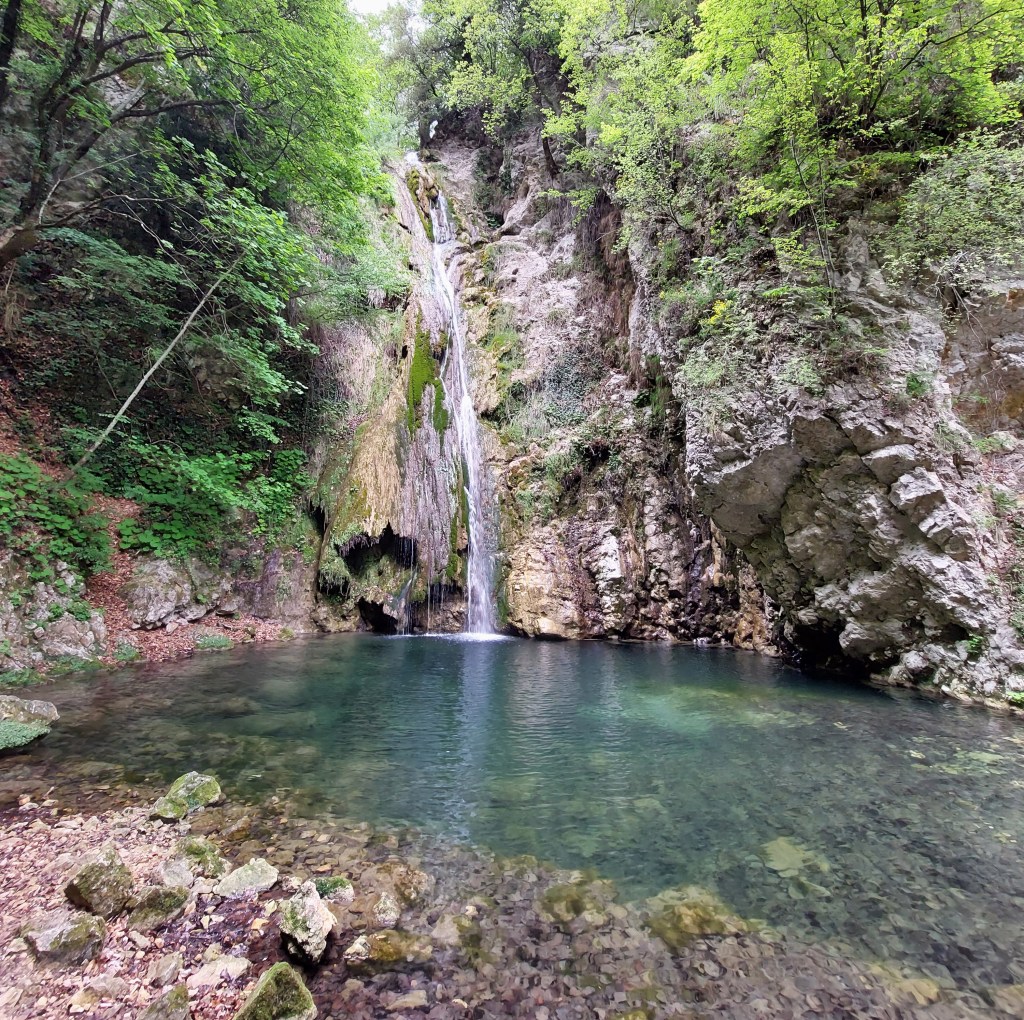
A bit further upstream along the trail, we pick our way through an overstory of branches. The roar of the waterfall grows louder, and as we make a final turn, it appears.
A pool lies deep before us, so brilliant in blue and turquoise. The water is clear enough to see every detail of the jagged rocky bottom. Tall crags tower maybe 100 feet overhead, converging in a low “v” where the water spills dramatically over the edge. As I gaze into the water, tiny fish scurry this way and that.
Here there is peace, harmony.
I imagine the miners coming up here after a long day, trudging toward the luring rush of the cascades to cool their brows and allow the water to heal their wounds. To drink from the sweet mineral water and refresh their souls in the shade.
It is curious to consider how man and nature have shaped the Cagne river. Both have left a mark – the river etching its way along the banks, carving canyons and giving life as it goes; the mine burrowing deep to extract resources buried below the surface and taking life away.
In the end, after the hand of time has erased this river, this mine, these people, what will remain? What will the land remember? Who even will be here to see it?
Sitting quietly at the water’s edge, I am transfixed. I wonder what it would be like to strip naked and dive in like the miners might have done decades ago. To let this magical water envelop me, the shock of its cool touch stealing my breath, the gentle motion of the eddies spinning me around.
To fully surrender to forces greater and longer enduring than I will ever be.
And maybe that’s the spirit, the knowing that draws me. In the end, nature will prevail, and my role is simply to find a way to enter the harmony.
Bisous,
Hanna
[1] HEAL (Health & Environmental Alliance) Briefing. 2018. Lignite Coal – Health Effects and Recommendations from the Health Sector.
[2] Jakob, M., Steckel, J.C., Jotzo, F. et al. The future of coal in a carbon-constrained climate. Nat. Clim. Chang. 10, 704–707 (2020). https://doi.org/10.1038/s41558-020-0866-1.
[3] Azau, S., Flisowska, J., Gierens, R., Gutmann, K., Huscher, J., Jones, D., Myllyvirta, L., and Urbaniak, D. 2016 Europe’s Dark Cloud, How Coal-burning Countries are Making Their Neighbours Sick. WWF European Policy Office, Sandbag, CAN Europe and HEAL in Brussels, Belgium/
[4] Caughill, Patrick. “France Is Officially Shutting All Coal-Fired Power Plants in Three Years, Macron’s decision pushes up the timeline by two years.” Futurism. January 25, 2018. https://futurism.com/france-officially-shutting-coal-fired-power-plants-three-years. Accessed July 10, 2023
[5] Desair, Shweta. “France likely to restart coal-fired power plant to deal with energy crisis fueled by Ukraine war.” AA Energy website, June 26, 2022, https://www.aa.com.tr/en/energy. Accessed July 11, 2023.
 40 Weeks in France
One response to “Harmonie”
Bien fait! Tu manque Provence, Maritime des Alpes.❤️🐝
JRB
<
div dir=”ltr”>
<
blockquote type=”cite”>
LikeLike