
As he approached the bench where we were sitting, I could tell instantly that there was something wrong. He walked tilted slightly to the left and seemed to drag every other step. His face was serious, stern almost. His eyes glassy and downcast. It took him a minute to recognize us out of context. But our recognition of him was immediate – as was our confusion.
We met this man (we’ll call him Stephan) our first week after we moved to our new village. Extremely kind and generous, he is the main waiter at our local restaurant. We walk to this place at least every other week. The kids love the steak frites and the fondant au chocolat.
But mostly, they come to see Stephan and he is overjoyed to see them. They talk about sports and school, joke about food and life. And they practice their French. “Stephan, voyez-vous le match de la Ligue des Champions? Vous pouvez croire le gardien, eh?” Probably in his early 30s, he relates to the boys in a way I cannot.
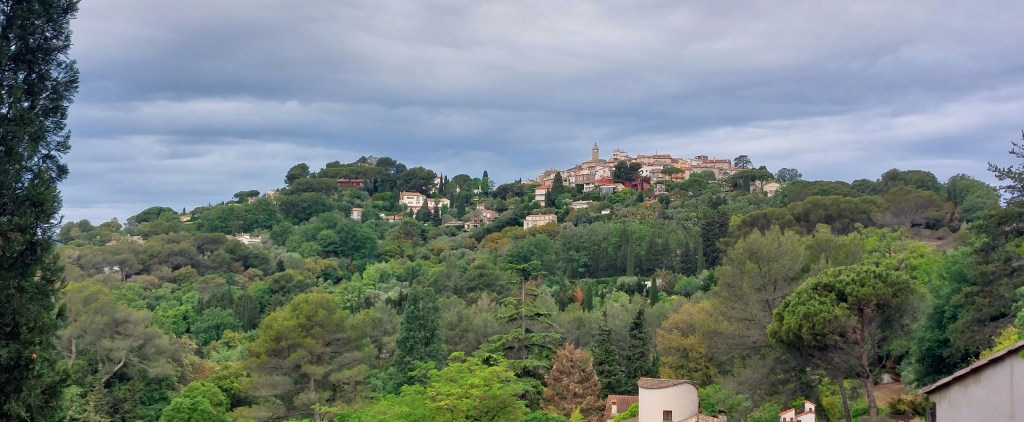
Over the last ten months, we have become familiar with our little town. We visit the old village often, and have come to know the local trades-people and many of their families and stories. Plus, our village is the size of a peanut – so everyone knows everyone.
Thus, it isn’t unusual to be sitting having an ice cream and run into the artist who taught your child, or laugh with the husband of the woman who runs the épicerie, or wave at the Michelin-star chef as he gets out of his car with his wife and two daughters.
And on Mondays when most of the shops and galleries are closed, it isn’t unusual to see these locals in plain clothes enjoying a coffee or a beer at the tabac.
Only this day, our friend had had a few too many. And that’s what caught us off guard.
At first, I saw him and waved heartily. Then he approached and my radar went up. He was beyond drunk and lost no time in telling us, repeatedly, just how drunk he was.
“You see…it’s my day off!” he stammered. “And I am soooo drunk…” (admittedly, there was an expletive in that last sentence).
I’ve encountered more than my fair share of drunk men in my life. So to me, this wasn’t so much scary as it was uncomfortable. I laughed it off and turned to his friend, another waiter. “Looks like you might need to take him home,” I said with a smirk.
But for my sons, thankfully I might add, this was the first time they’d seen a blackout drunk person. And seeing their friend this way was horrifying to them.
Perhaps it is social convention – never wanting to make someone feel uncomfortable or judged, but in that moment, I chose to downplay the situation rather than to consider the toll this might take on my sons.
Don’t you wish you could have a rewind button at your disposal sometimes?
Eventually, our friend wisely wandered off to sit and have a bite to eat at the cafe. But the impact on my sweetly sensitive sons was done. They eyed him with suspicion from around the corner. We tried to talk about the situation, to have empathy for our friend and acknowledge that alcohol can have disastrous effects if you don’t manage it well. However, their pain and disappointment were palpable.
They were afraid he would become violent. They hoped he didn’t drive himself home (me too!). They asked why his eyes were so weird. They didn’t understand why someone so kind and happy would turn into someone so angry and frightening.
I struggled to keep up with all the questions, keep my children from feeling afraid, keep everything neat and tidy. “It’s ok, guys. You’re safe.” I tried to get them to see the lesson in it all. And then I tried to get them to send the man loving kindness. I felt like I was playing whack-a-mole and coming up short every time.
I became confused, impatient, and irritable. “Guys, look, it’s not that big of a deal!”
Back at home a while later when I stopped to process the event, I noticed that I hadn’t paused long enough to let my own feelings surface, let alone the feelings of my sons.
As I closed my eyes my own darkness hit me like a wave. Disappointment in the behavior of others, loss of trust in a place I had thought was predictable and safe for my family, fear that this would be an event that changed how we related to our neighbors, sadness at the loss of some of my sons’ innocence.
As soon as these feelings crested, the tears came. But then I felt my shoulders soften and the wave start to dissipate. Calm came back – and when I opened my eyes, I could breathe again.
And then I could meet my sons where they were, instead of where I wanted them to be.
The truth is that the world isn’t Disneyland, no matter how much I try to protect my children from it. I can’t keep them from being in the world as it is: messy, unpredictable, confusing, and scary sometimes. People disappoint us – sometimes they do horrible things that leave us stunned. The trick is to learn to adjust to the moment while keeping our moral center.
As many mistakes as I have made in my life and as many peculiar situations as I have faced, I can’t merely download these lessons to them or pass them on by osmosis. My children can’t learn without being exposed bit by bit to reality.
I recognize that my job is to step back and support them as they experience these moments – while ensuring that they are safe from danger, obviously. I must welcome the wide range of their feelings rather than trying to hastily fix them.
And teach them to respond, rather than react.
Maybe they will gain a little “street smarts” from this moment. One day (sadly not too far away) they might see a friend in this situation and know how to help them, or at least not get in a car with them behind the wheel. Perhaps when they are older and have a day off, they might make a different choice.
So, I guess I’d like to thank my friend in the village for the small dose of reality today. And hope that tomorrow his headache isn’t too excruciating.
Bisous,
Hanna
 40 Weeks in France
2 responses to “Merci monsieur”
Grandir est plain de lecons. Bien joue.❤️🐝
LikeLike
🥲😄👍
Sent from my iPhone
<
div dir=”ltr”>
<
blockquote type=”cite”>
LikeLike